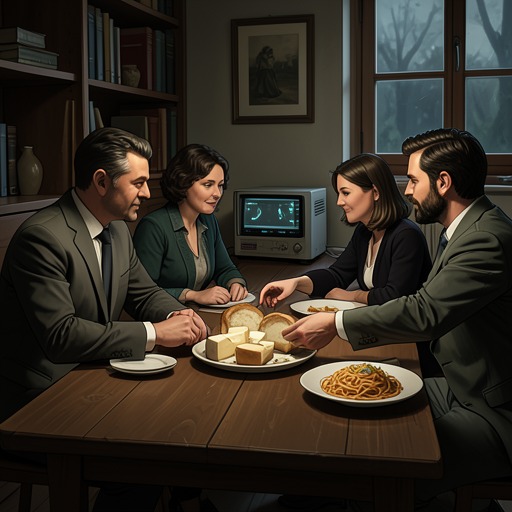
Ava and Gabriel's baking date and mutual confession
My Hot Secret: Geheimes Baby mit dem CEO Milliardär - Enemies to Lovers (German Edition)Ava and Gabriel’s baking date and mutual confession is a decisive intimacy event in which domestic labor, family inheritance, and emotional disclosure transform their relationship. What begins as an arranged “friendship date” at Madame Vivienne’s bakery becomes a backstage encounter where Gabriel reveals that he owns the bakery, explains the losses and neglect that shaped him, and receives Ava’s account of her deceased fiancé. The evening culminates in a kiss, but also in Ava’s fear that desire may demand the very commitment she has been trying to avoid; the pair therefore continue only under a cautiously negotiated friends-only arrangement.
The Invitation and the Bakery Setting
Ava agrees to visit Gabriel after work for an evening of baking. She understands that baking is the work he pursues with genuine passion and hopes that entering this part of his life will allow her to know him more fully. Her willingness is significant because she is not merely accepting another social meeting: she is stepping into the practice through which Gabriel expresses identity, inheritance, and care. Gabriel, meanwhile, is so pleased by her agreement that he returns to rolling croissant dough while whistling to himself.
The bakery is closed when Ava arrives, its lights off and its doors shut. Gabriel emerges from the kitchen, smiling broadly, dressed in an apron over a white T-shirt and worn but well-kept light-blue jeans. The closed storefront separates the meeting from the public world of the bakery and gives the encounter the quality of a private workshop. Inside, Ava finds not an austere production room but a richly appointed kitchen resembling a fanciful workshop. Blue, white, and gold continue the colors of the storefront; a gray marble counter dominates the center; modern and wood-fired ovens line one wall; and elaborately decorated antique tins sit on the windowsill among food and ingredients. The setting makes Gabriel’s craft visible as both practical labor and family culture.
Brioche, Ownership, and Family Inheritance
Gabriel begins with brioche, the bread Ava previously enjoyed. He explains that it is an enriched dough rather than ordinary bread: flour, yeast, and water are supplemented with milk, butter, and eggs, producing a richer flavor, while sugar gives the preparation its distinctive character. The lesson is also a form of introduction. Ava knows little about bread-making, but she is captivated by the confidence and ease with which Gabriel weighs ingredients, prepares the dough, and teaches her to knead it. He gives her an apron matching his own, turning the activity into a shared practice rather than a demonstration she merely watches.
Ava assumes that Gabriel must ask his employer before allowing her into the kitchen. His laughter reveals the mistake: he is the chef because the bakery belongs to him. The disclosure unsettles her understanding of his identity. Gabriel is not simply a baker working in a beloved establishment; he is also the owner of the business, although he does not initially present that status as a source of prestige. The revelation creates a contrast between the material authority he possesses and the emotional distance he feels from the company he inherited.
When Ava asks how he came to baking, Gabriel’s manner changes. He becomes tense and sad before answering that his mother, Vivienne, founded the bakery. She established it before meeting Gabriel’s father, and the parents met there before marrying soon afterward. Gabriel’s account connects the bakery with the beginning of his family and with the mother whose memory still governs his relationship to the craft. The dough is therefore not only a recipe or commercial product; it is a material continuation of his mother’s life.
Gabriel also explains that his father founded a company shortly after Gabriel’s birth. After Vivienne died, the father devoted himself almost entirely to work, leaving Gabriel to experience him as a stranger. The company became successful through that devotion, but Gabriel describes himself as the price paid for it. When his father died two years earlier, he left Gabriel the company, effectively handing him the institution that had mattered more to him than his son. Gabriel says that he does not want it and that the business means nothing to him. His bitterness clarifies why the bakery carries emotional warmth while inherited corporate power feels like an accusation.
Mutual Disclosure and the Release of Grief
Gabriel’s vulnerability prompts Ava to speak more openly than she intended. She tells him that her fiancé died, making him the first person outside the original circumstances of her loss to whom she has entrusted the fact. Gabriel does not respond with the pity that surrounded Ava for months after the accident. Instead, he meets her with recognition and understanding, allowing the confession to remain intimate rather than turning it into a spectacle of suffering. Their hands continue working the dough while their disclosures settle between them, creating silence that feels companionable instead of burdensome.
After the dough is covered and left near the ovens to rest overnight while the yeast forms air pockets and doubles its volume, the practical distraction of baking recedes. Ava can no longer keep her thoughts away from what they have said. She recognizes that she has suppressed her feelings and kept pain at a distance, and Gabriel’s account has broken through that defensive barrier. She tells him that, after her fiancé’s death, she no longer wanted to become close to anyone because she could not endure another loss. Keeping people at a distance seemed safer. Gabriel answers that he understands, and Ava believes that he truly does. The exchange establishes a reciprocal bond grounded not in idealized romance but in parallel experiences of bereavement, abandonment, and self-protection.
The Kiss and the Friends-Only Boundary
The emotional restraint of the evening gives way during a playful interruption at the sink. Gabriel turns off the faucet before their teasing can become a full water fight, and both laugh as the tension dissolves. He hands Ava a towel, their fingers touch, and neither immediately releases it. Holding the towel between them, Gabriel draws her closer and kisses her. This kiss differs from the earlier encounter that led to their pregnancy: it is described as tender rather than merely sensual, and Gabriel holds and rocks Ava while she clings to his shirt.
Ava does not stop him because she does not want to. The kiss violates the rules she established for herself, yet the immediate physical truth of the moment outweighs those rules. Its importance lies precisely in the conflict it creates. Ava wants Gabriel not only sexually but potentially as a partner, and that possibility frightens her. She questions whether he can accept the responsibility of fatherhood, while the account of his own absent father makes the question more than an ordinary romantic hesitation. His inherited company, his rejection of his father’s values, and his history of emotional deprivation all become part of Ava’s private assessment of whether he is capable of building a different family life.
Ava steps back after the kiss, trying to restore distance and reduce temptation. She reminds Gabriel that they are supposed to be only friends and says that she needs more time, making clear that this is not a complete rejection. Gabriel does not become angry. He proposes a compromise: she need not rush into a relationship, but they might still have some fun together. Ava accepts cautiously, saying that they can at least try and that she wants to see him again. The agreement preserves her stated boundary while acknowledging that the encounter has made emotional neutrality impossible. Their relationship consequently moves forward through limits and negotiation rather than through an uncomplicated declaration.
Narrative Significance
The baking date joins food, labor, and confession into one relationship ritual. Brioche requires added milk, butter, eggs, and sugar, and the shared preparation similarly enriches what had been a carefully restricted connection: Gabriel contributes family history and vulnerability, while Ava contributes the grief she has kept sealed away. The dough must rest before it can rise, providing a quiet structural image for the pair’s decision to slow their relationship rather than force an immediate resolution.
The event also reverses the social masks both characters maintain elsewhere. Ava is accustomed to presenting herself through work and control, while Gabriel’s public identity obscures the emotional burden of his inheritance. In the closed bakery, those roles loosen. A mistaken assumption about Gabriel’s job leads to the revelation that he owns the establishment; a question about baking leads to his mother and father; and ordinary kneading leads Ava to name the loss that governs her guardedness. The date therefore functions as a hinge between attraction and trust. It does not solve either character’s trauma, but it establishes the possibility that intimacy can be practiced with disclosure, respect, and time rather than imposed through pressure or denial.